
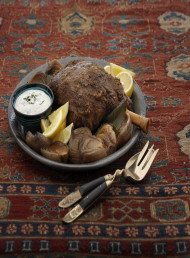
Easter Slow Roast Lamb with Rosemary, Garlic and Vine Tomatoes
Photography Sarah Tuck.
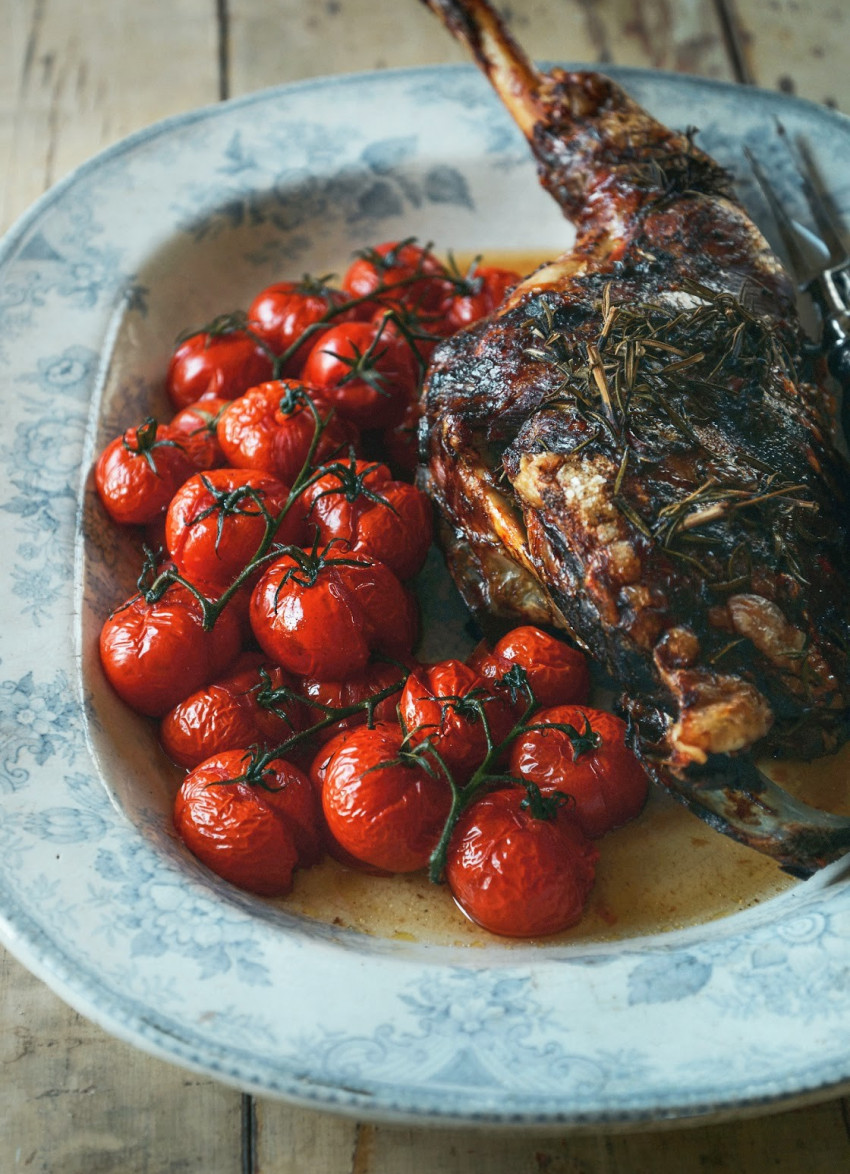

I served this for Mother’s Day a few years back with crispy roasted potatoes crusted in polenta, and zucchini and beans with garlic, lemon and parsley, and another time recently with watercress and beetroot salad, roasted baby carrots and celeriac and potato mash… the options are endless.
Serves: 8
INGREDIENTS
1 large (at least 2 kilogram) whole leg of lamb, bone in, at room temperature
8 big garlic cloves, peeled
8 sprigs rosemary
juice ½ lemon
sea salt and ground pepper
Gravy (optional)
2 tablespoons flour
1½ cups red wine, hot water or stock*
Tomatoes
24 medium small vine tomatoes, on the vine
2 tablespoons olive oil
1 tablespoon balsamic vinegar (optional)
METHOD
Equipment: Set the oven rack for the lamb low enough in the oven that you can fit a rack above it, not too close to the top of the oven, for the tomatoes to be added later.
Preheat the oven to 160°C.
Use a small sharp knife to make 8 deep cuts in the top fat-side of the lamb. Poke a garlic clove into each of these holes. Rip off a few bits of rosemary and poke them in the same holes – don’t worry if it looks a bit messy.
Put the remaining rosemary in a big roasting dish and lay the leg, fat side up, on top. Squeeze over the lemon juice and season really well. Pour ¾ cup of water into the base of the roasting dish (not over the lamb), and cover with tinfoil. Roast in the oven for 3 hours. Remove the foil and roast a further 1½-2 hours. Take the lamb out of the oven, transfer it to a serving dish or board and cover with tin foil, shiny side down, and a tea towel on top, to keep it warm.
Tomatoes: When your lamb has about 30 minutes left to cook, place the tomatoes in an oven dish, drizzle with olive oil and balsamic vinegar, if using, and season well. Roast on the top rack of the oven for around 40 minutes.
Gravy: While the lamb is resting, remove the bits of rosemary that aren’t glued to the roasting dish, pour off most of the excess fat and put the roasting dish on the stove top over a low heat. Add the flour (use less or more depending on how thick you like your gravy) and use a wooden spoon to stir the flour around the pan, digging up all the brown bits, which carry all of the flavour. Once this forms a paste, slowly add the wine, water or stock, stirring all the time, and cooking until a smooth, rich gravy is formed. Season well. If the gravy misbehaves just whisk it into submission until it de-lumps, it will work.
To serve: Once the gravy is made the tomatoes will be ready – and it’s time to carve.
Cook’s note: Traditionally, hot cooking water from the likes of drained minted peas is used for a gravy, so this is an option as is the red wine, for a richer, darker gravy.
Wine match: Te Kairanga John Martin Pinot Noir.

Keep up to date with
dish weekly recipes,
food news, and events.
Related Content

latest issue:
127
In Dream Escape, we journey from Japan and Morocco to Italy, India and beyond, sharing recipes inspired by travel, heritage and comfort. We celebrate the champions of the Outstanding Food Producer Awards, explore the stories and recipes of chefs shaped by their cultural roots, and warm up with everything from West African soups and slow-braised lamb to porchetta, butter chicken and beef noodle soup. Alongside destination menus, Scandinavian sweets and cosy pub classics, Chrisanne Terblanche shares her favourite street-side dining spots in Bangkok, while Yvonne Lorkin explores red wine varietals. This issue, we invite you to slow down, turn the pages and escape through food.