
Jane & Jimmy Barnes: Seasons Where the River Bends
Photography Alan Benson.
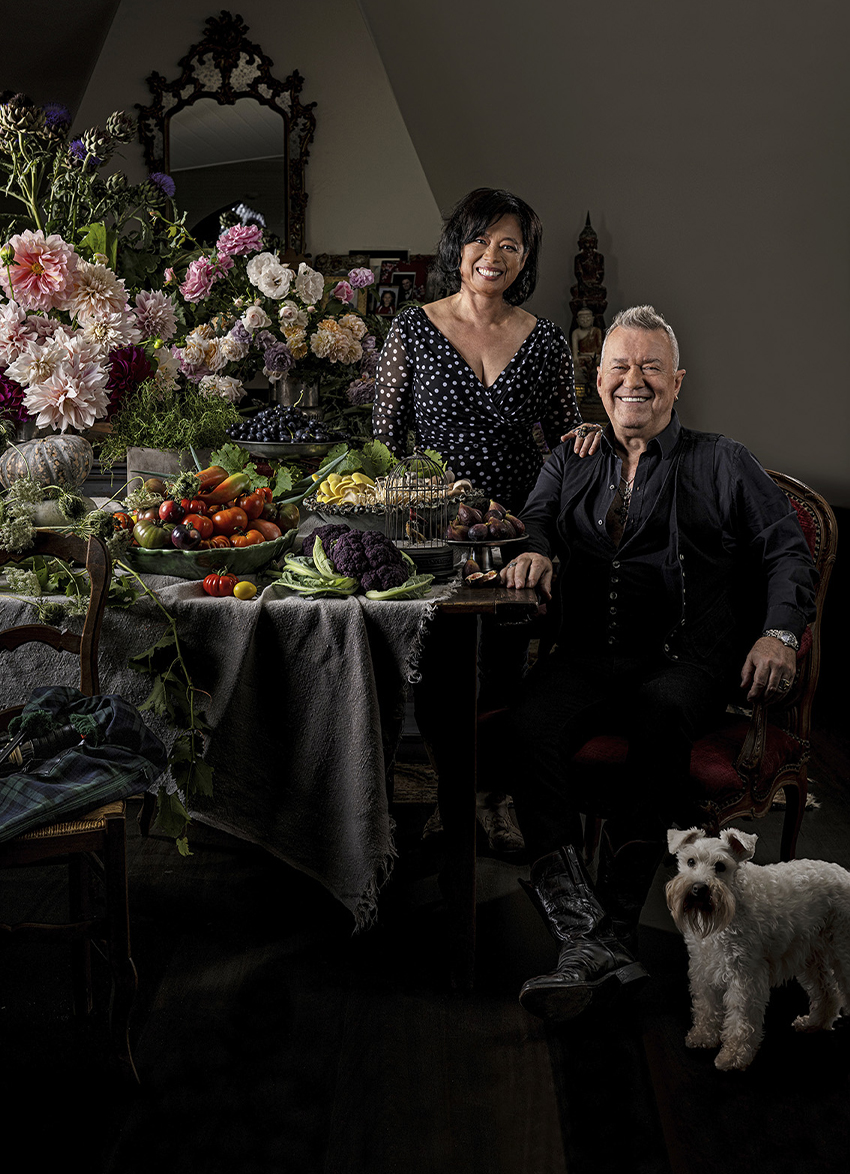
Already attuned to the rhythm of rock ’n’ roll, in their second cookbook Jane and Jimmy Barnes focus on recipes written to the rhythm of nature.
These recipes are an edited extract from Seasons Where the River Bends by Jane and Jimmy Barnes. Published by HarperCollins.
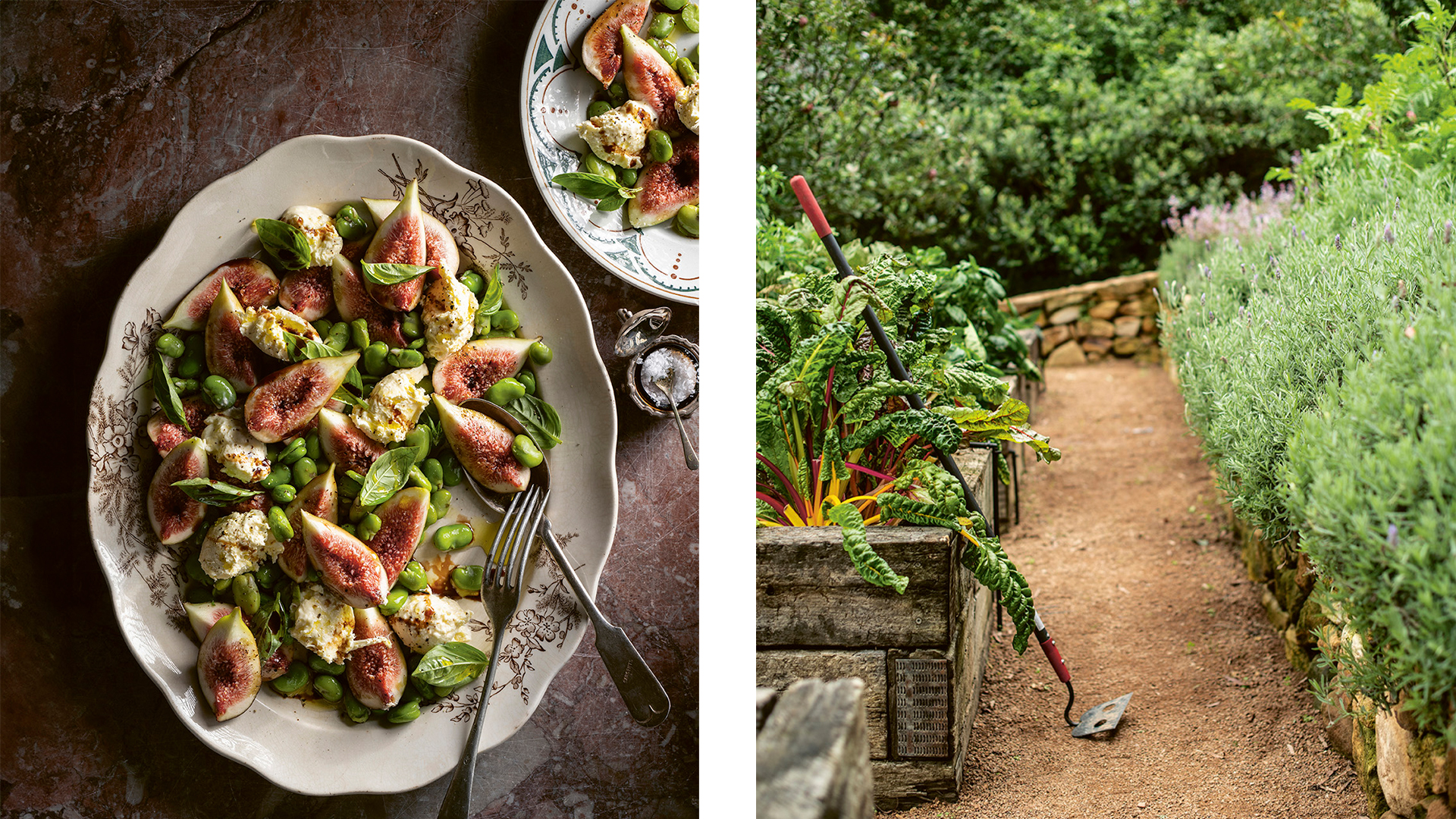
Broad Bean, Fig, Stracciatella and Basil Salad (gf) (v)
This recipe is fresh, healthy and straight out of the garden. Broad beans (also known as fava beans) are double peeled — first from the pods, then from the skins after cooking. The colour is gorgeous and they are one of those truly seasonal vegetables that should be enjoyed at their prime. You could finish this salad off with a scatter of pine nuts for a little more texture, if you like.
Ingredients
2 cups podded broad beans
Handful of basil leaves
10 ripe figs
250g tub stracciatella cheese
Sea salt and freshly ground black pepper
Extra virgin olive oil
Caramelised balsamic vinegar
Method
Bring a medium saucepan of water to the boil. Blanch the broad beans by dropping them into the water and cooking for no longer than 2 minutes. Transfer to a bowl of iced water for a couple of minutes to stop the cooking, then drain.
To peel the beans, use your thumbnail to slit the skin at one end and squeeze gently — the beautiful green bean will pop right out.
Wash the basil by soaking briefly in cold water. Shake off the water and pat dry with paper towels.
Trim the tops off the figs, then cut them into quarters (or sixths if large). Arrange on a serving plate and add the beans. Tear clumps of stracciatella and spread around the dish. Scatter with the basil leaves, season with salt and pepper, then dress with a drizzle of olive oil and a dash of vinegar to taste.
Serves 8
Cook’s note: To remove the beans from the pods, first string the pod, then run your thumb along the inside, pushing out the beans.
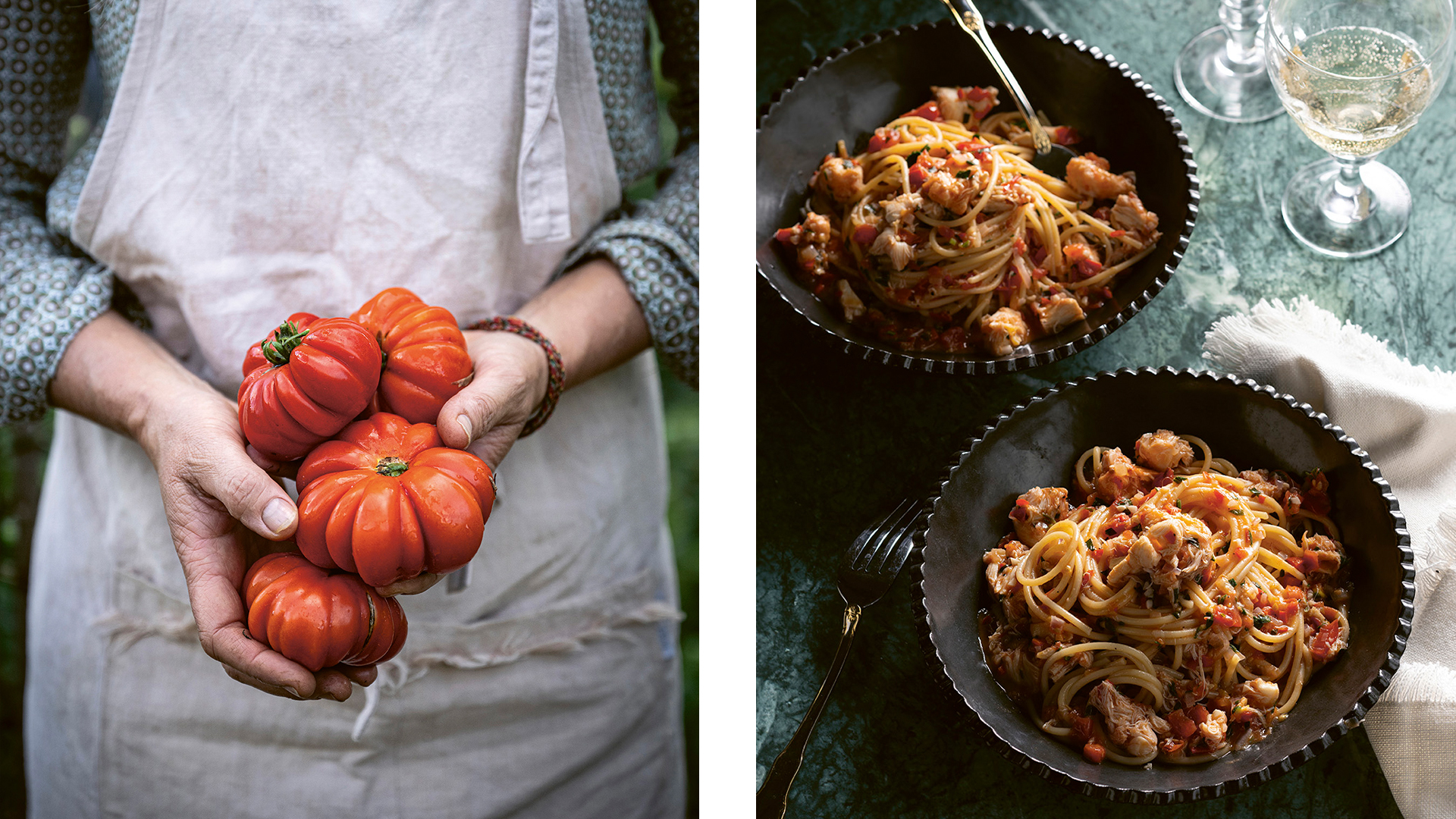
Pasta with Lobster and Champagne Sauce
This dish sounds rich, luxurious and special — and there’s no denying it is. I started cooking it a few years ago when there was a glut of lobster as a result of trading tensions between Australia and China. I loved that we could support our local industry in a time of need, and get a lobster for $20.
The ingredients for the sauce all come from our garden — except for the champagne, of course! The secret when cooking alcohol is to use a drink you would enjoy on its own. And if you don’t drink, it’s okay, as the alcohol will burn off during the cooking, leaving just the flavour.
Ingredients
200–300g spaghettini (or pasta of your choice)
100g butter, plus 25g extra
1 cooked lobster, halved, meat torn into small chunks
4 heirloom tomatoes (such as ox heart), chopped
1 garlic clove, crushed
2 eschalots, finely sliced
1 tablespoon finely chopped parsley
2 sprigs thyme
½ cup champagne
Finely chopped chilli, to taste
Method
Cook the spaghettini in a large saucepan of salted boiling water according to packet directions, or until al dente.
Melt the 100g butter in a large, deep frying pan over medium–low heat. Add the lobster and toss briefly in the butter to heat through. Transfer to a plate and set aside.
Add the tomato, garlic and eschalot to the pan and cook for a few minutes until soft. Add the parsley and thyme, then stir in the champagne and season to taste.
Add the extra butter to the sauce along with a ladle of pasta water and stir over medium–low heat until combined — the starch in the pasta water will give the sauce a smooth, creamy texture. Add the lobster meat and heat through.
Transfer the pasta to the sauce, add the chilli and toss to combine. Serve immediately with a garden salad on the side.
Serves 2
Cook’s notes:
Be careful not to overcook the lobster meat, as that can make it dry.
Remember to taste and adjust the seasoning as you go, and give the sauce time to bubble and reduce.
latest issue:
127
In Dream Escape, we journey from Japan and Morocco to Italy, India and beyond, sharing recipes inspired by travel, heritage and comfort. We celebrate the champions of the Outstanding Food Producer Awards, explore the stories and recipes of chefs shaped by their cultural roots, and warm up with everything from West African soups and slow-braised lamb to porchetta, butter chicken and beef noodle soup. Alongside destination menus, Scandinavian sweets and cosy pub classics, Chrisanne Terblanche shares her favourite street-side dining spots in Bangkok, while Yvonne Lorkin explores red wine varietals. This issue, we invite you to slow down, turn the pages and escape through food.