
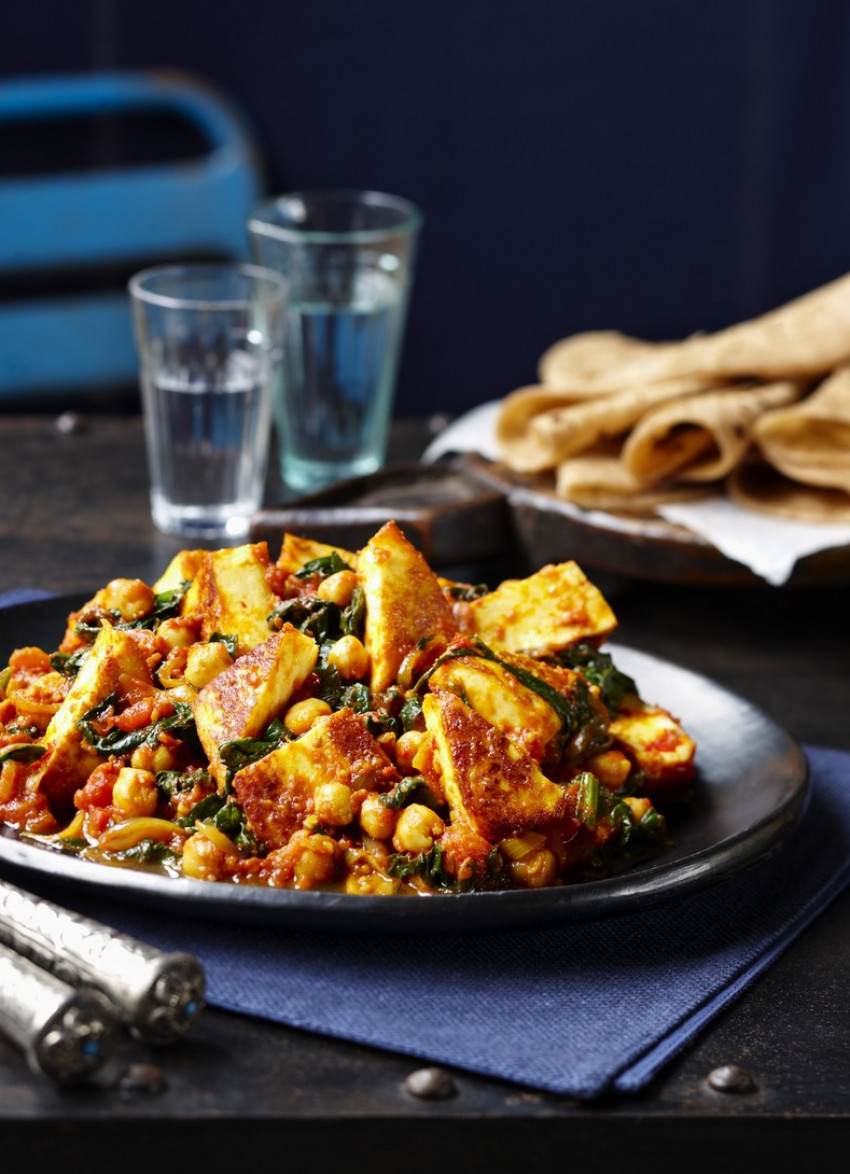

Serves: 4–6
INGREDIENTS
3 tablespoons vegetable oil
1 teaspoon each cumin seeds and yellow mustard seeds
1 teaspoon ground turmeric
2 long red chillis, seeded and finely chopped
1 large onion, thinly sliced
2 cloves garlic, crushed
1 tablespoon grated fresh ginger
2 x 400 gram tins crushed tomatoes
1 x 400 gram tin cooked chickpeas, drained and rinsed
3 cups packed spinach leaves
3 tablespoons tamarind concentrate
sea salt
Paneer
2 x 300 grams packets of paneer
vegetable oil
METHOD
Heat the oil in a saucepan and cook the cumin and mustard seeds until they start to pop. Add the turmeric, chillis, onion, garlic and ginger, season with salt and cook until the onion is tender. Add the tomatoes and chickpeas and simmer for 15 minutes.
Put the spinach in a heat-proof bowl and cover with boiling water. Turn to wilt, drain and squeeze out the excess water. Chop roughly and stir into the tomato mixture along with the tamarind concentrate. Cook for 2 minutes. Taste and season with salt if needed.
Paneer: If the paneer has been packed in water or whey, pat dry with kitchen towels. Slice the paneer into 2 cm thick batons. Heat ½ cm of vegetable oil in a sauté pan and cook the paneer until golden on both sides. Transfer to kitchen towels to drain then cut into large bite-sized pieces and combine with the tomato sauce.
To serve: Transfer to a shallow serving bowl.
Pantry Notes
Paneer: this is the Indian version of cottage cheese. It is made in large blocks and is very different from the soft curd cottage cheese available at the supermarket. Paneer is cut into cubes or slices for cooking and readily absorbs flavours from other ingredients used in the dish. It is available from Indian and Asian food stores, good supermarkets and specialty food stores.
Tamarind concentrate: made by soaking dried tamarind pods in water then passing through a sieve to obtain a pulp. You can make it yourself easily from block tamarind or buy the concentrate ready-made in a jar. The flavour is sour-sweet and is used in Asian and Middle Eastern dishes in the same way lemon juice is used in Western cooking. Both pods and concentrate are readily available from Asian grocery stores and good supermarkets.

Keep up to date with
dish weekly recipes,
food news, and events.
Related Content

latest issue:
127
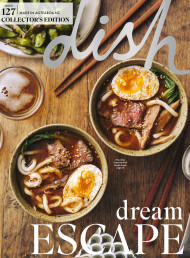
In Dream Escape, we journey from Japan and Morocco to Italy, India and beyond, sharing recipes inspired by travel, heritage and comfort. We celebrate the champions of the Outstanding Food Producer Awards, explore the stories and recipes of chefs shaped by their cultural roots, and warm up with everything from West African soups and slow-braised lamb to porchetta, butter chicken and beef noodle soup. Alongside destination menus, Scandinavian sweets and cosy pub classics, Chrisanne Terblanche shares her favourite street-side dining spots in Bangkok, while Yvonne Lorkin explores red wine varietals. This issue, we invite you to slow down, turn the pages and escape through food.