
Bagna Cauda
Photography Vanessa Wu.
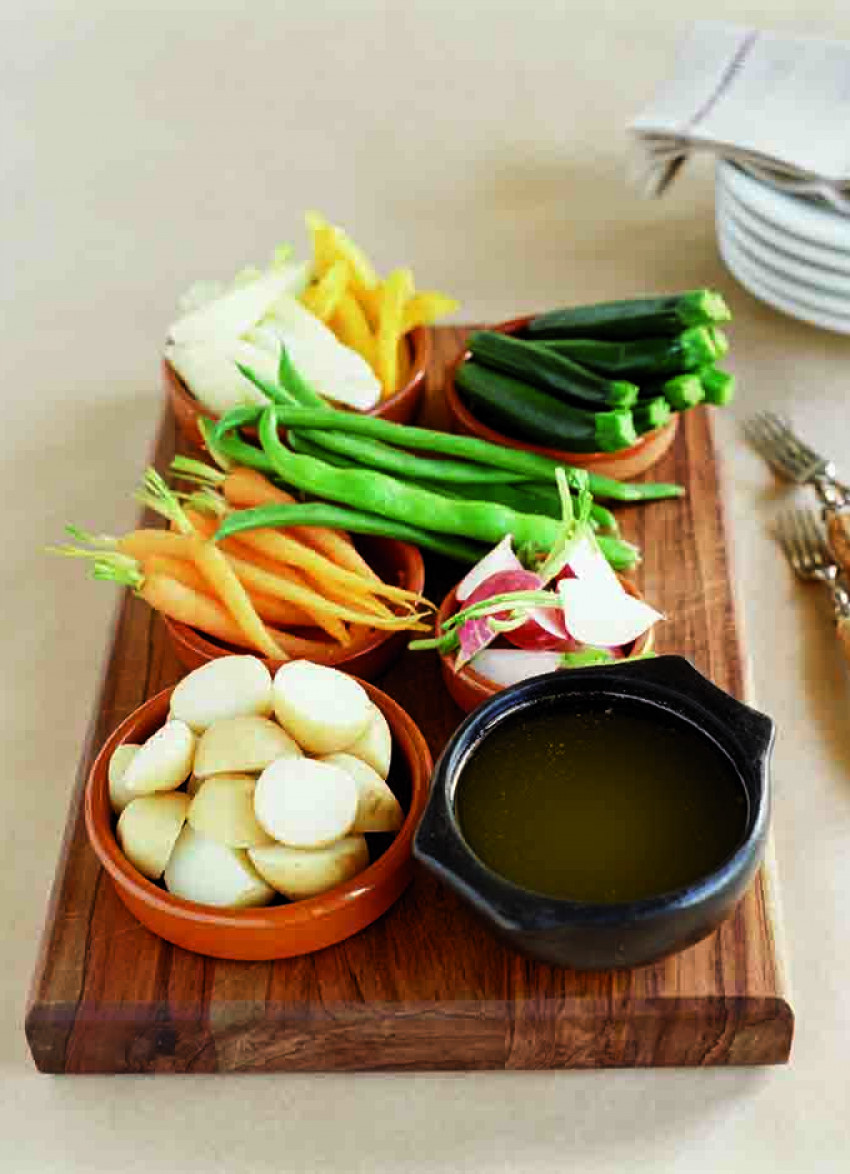

This dish is a specialty of the Piemonte region. It is eaten by dipping raw or blanched vegetables into the warm ‘bath’ of anchovies and garlic, the vegetables being a nice counter to the richness of the sauce.
Serves: 4-6
INGREDIENTS
250 ml olive oil
60 grams butter
4 cloves garlic, crushed
12 anchovy fillets, chopped
2 teaspoons each lemon and orange zest
1 tablespoon orange juice
2 tablespoons lemon juice
pinch chilli flakes – optional
1 tablespoon finely chopped flat leaf parsley
Selection of vegetables for dipping
small new potatoes, cooked green beans, blanched baby carrots, blanched raw fennel bulb, sliced radishes
celery artichoke hearts roasted or raw slices of capsicum
METHOD
Put the oil in a saucepan and heat until warm. Add the butter, garlic and anchovies and stir until the anchovies melt into the sauce. Do not allow the mixture to boil. Stir in the citrus zest and juice, chilli flakes and the parsley.
To serve: Arrange the vegetables on a serving platter and serve with the hot bagna cauda. Vegetables are dipped in the sauce or a selection of vegetables can be placed on serving plates and the sauce spooned over.
Traditionally the bagna cauda is served in a bowl over a small flame to keep it warm. A small fondue pot is ideal for this purpose.

Keep up to date with
dish weekly recipes,
food news, and events.
Related Content
latest issue:
127
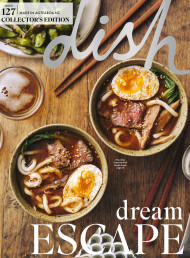
In Dream Escape, we journey from Japan and Morocco to Italy, India and beyond, sharing recipes inspired by travel, heritage and comfort. We celebrate the champions of the Outstanding Food Producer Awards, explore the stories and recipes of chefs shaped by their cultural roots, and warm up with everything from West African soups and slow-braised lamb to porchetta, butter chicken and beef noodle soup. Alongside destination menus, Scandinavian sweets and cosy pub classics, Chrisanne Terblanche shares her favourite street-side dining spots in Bangkok, while Yvonne Lorkin explores red wine varietals. This issue, we invite you to slow down, turn the pages and escape through food.